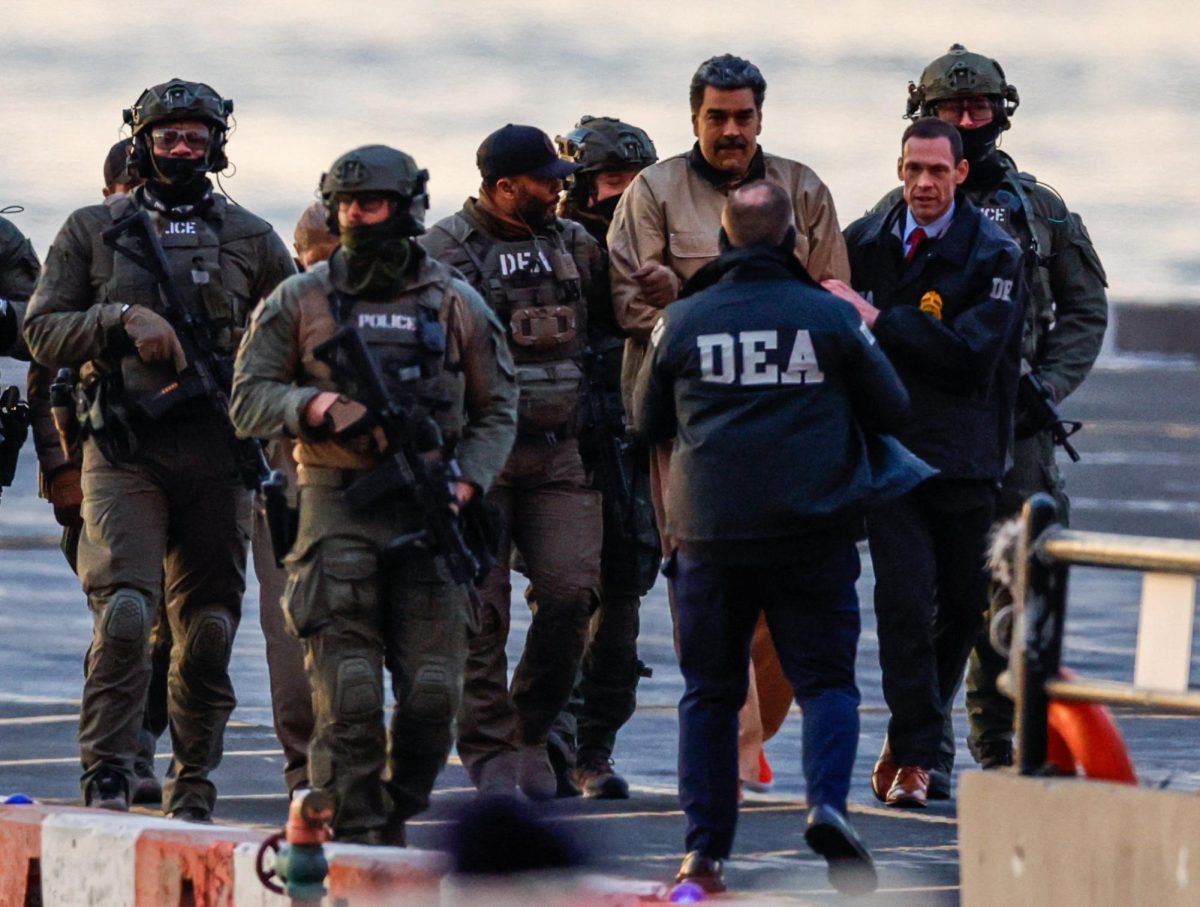
The United States has captured Venezuelan President Nicolás Maduro during a military operation, citing his leadership as a dictatorship. News outlets have confirmed that U.S. forces took Maduro into custody, marking a rare and controversial direct action by the United States.
Teachers say moments like this are important for students to think carefully about what they see online. AP Gov teacher Ben Hubing said stories involving different countries are often more complicated than they appear.
“It’s a complex situation that involves diplomacy, international law and long-standing tensions between the two countries,” Hubing said. “Events like this don’t happen on their own and need to be looked at with context.”
The United States and Venezuela have had a tense relationship for many years. The U.S. government has accused Venezuela’s leadership of corruption and human rights abuses. Venezuela’s government has pushed back and accused the U.S. of interfering in its country.
Because of this long history, major actions like capturing a foreign leader can seem both significant and controversial. Hubing said the U.S. usually handles issues with other countries through communication and agreements.
“The U.S. usually works through diplomacy and international organizations,” he said.“Direct action involving foreign leaders is rare and often controversial.
Senior Leo Gamboa believes the move was possibly beneficial to the Venezuelans.
“This was a controversial move by the USA, but Venezuelans were happy as their president was a dictator,” he said.
Junior AJ Bird, an AP Government student, said he tries not to trust headlines right away.
“I try to look at multiple sources and learn the background so I don’t just believe one headline,” Bird said.
Bird said topics like this sometimes come up during class discussions. Instead of arguing personal opinions, students think about how government decisions are made.
“We talk about it in terms of foreign policy and how the U.S. makes decisions, not really arguing sides,” he said.
Social media plays a big role in how students get news, but it can also cause problems, especially in situations like this. Fake images, AI videos and misleading descriptions can make stories seem real even when they are not verified.
Teachers tell students to slow down and check reliable sources before believing or sharing information. Hubing said learning how to tell the difference between facts and rumors is an important skill.
“Being informed means slowing down and checking facts,” he said. “That’s a big part of being a responsible citizen.”
Because the Venezuelan president was captured, the discussion connects directly to what students learn in AP Government. Topics like foreign policy, international law and how countries interact are all part of the curriculum.
Students like Gamboa say using actual real life examples makes learning feel easier. Instead of only reading about government systems on their chromebooks or in textbooks, they can connect class topics to current events happening around the world.
Situations like this show students that news is not always as it has presented itself. Ask questions, check your sources and make sure you understand the context. This way students can become more informed about news.